Retail Store Books CleanupUnearned until it is used
Last season's gift cards are still sitting in income, so the year looks better than the cash you are allowed to keep.
Send the season.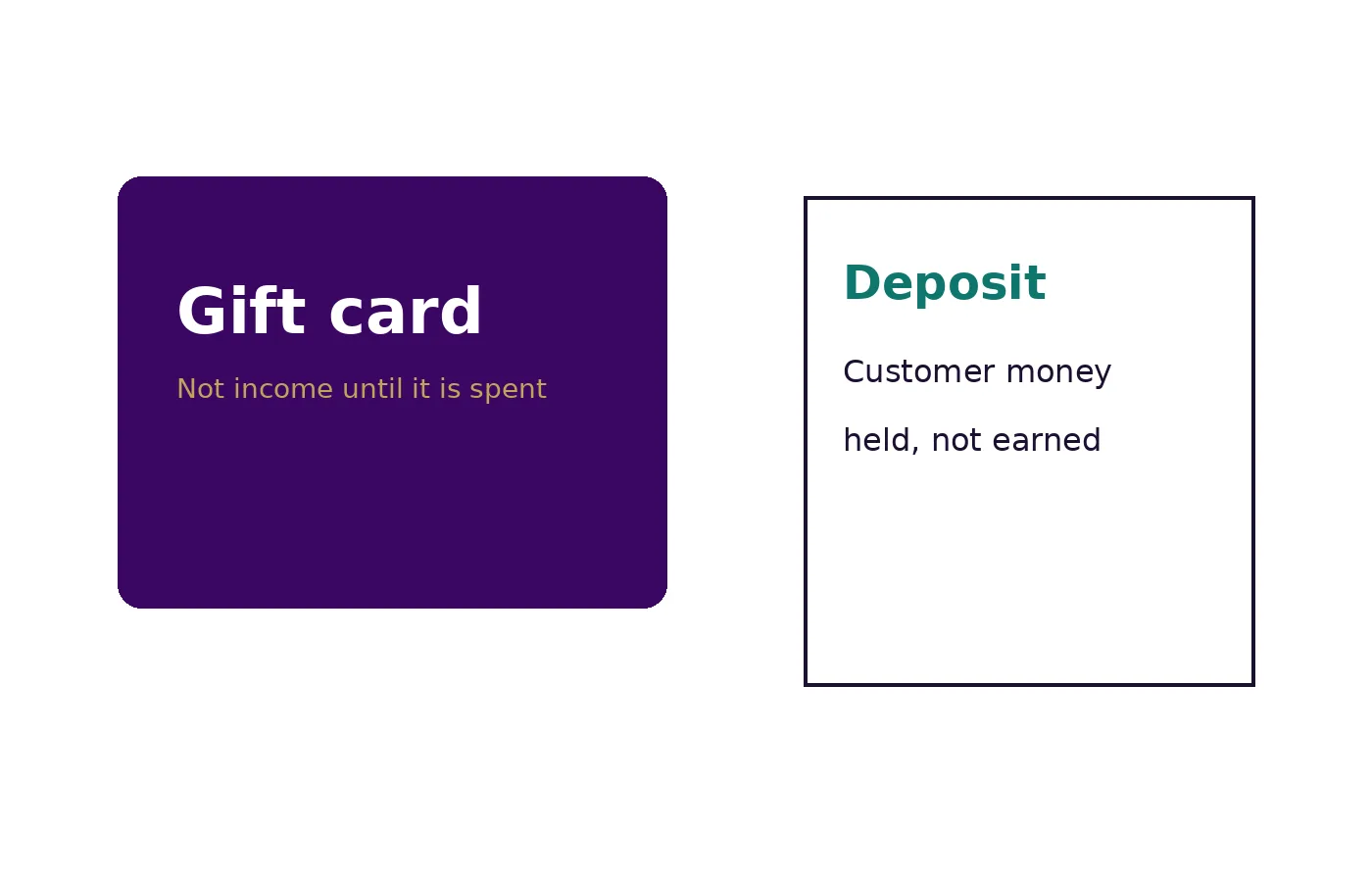
The card is a liability.
A gift card sold in November is a promise, not a sale of goods. The money is yours to hold. The income arrives when a shopper spends the card. Leaving the sale in income makes November look finished and makes the redemption month look like a loss.
We move the unredeemed balance out of income and onto the balance sheet. Redemptions then reduce that balance and recognize the sale in the month the goods actually leave. Breakage, if you recognize it at all, follows a rule you can explain, not a mood at year end.
Deposits and loans.
A customer deposit has the same shape. You are holding money for goods you have not handed over. It is not revenue. A deposit that was really a loan from you, or from someone else, is a third shape. The paper says which. The memo on the transfer often says nothing, so we ask.
Cash you moved in on a short Friday to cover the drawer is a transfer, and the sales account is the wrong home for it. Booking it as income hides the short and invents profit. We label it as what the paper supports. If there is no paper, it stays on the open list until there is.
Returns in the wrong month.
A return from a later month, still sitting in an earlier one, is the mirror problem. The earlier month looks worse, or the later month still carries a sale that was undone. We move the return to the month it happened, including the tax that went with it.
Gift-card redemptions and ordinary returns are easy to mix in a busy file. One reduces a liability. The other reverses a sale. The close keeps them apart so December does not punish you for a November card.
What we need from you.
The card report from the register, the deposit log if you have one, and the transfers you were unsure about. A perfect history of every card ever sold is not the starting packet. The open balance and the redemptions in the open months are enough to stop the year from lying.
After that, the monthly close has a line for cards sold, cards spent, and deposits still unearned. The line is short on purpose. A long reconstruction every month is how the practice gets abandoned.
A card sold at the counter and redeemed online still has one balance. The channel split does not create a second card. The redemption recognizes the sale in the channel that handed over the goods, and the liability falls by the same amount. If the report from the register and the report from the website disagree, that disagreement is the open item, not a reason to leave the whole balance in income for another year.