Retail Store Books CleanupOne pass, three uses
You looked because a date showed up, and the file is not ready for the sales-tax notice, the lender, or the year end.
Name the deadline.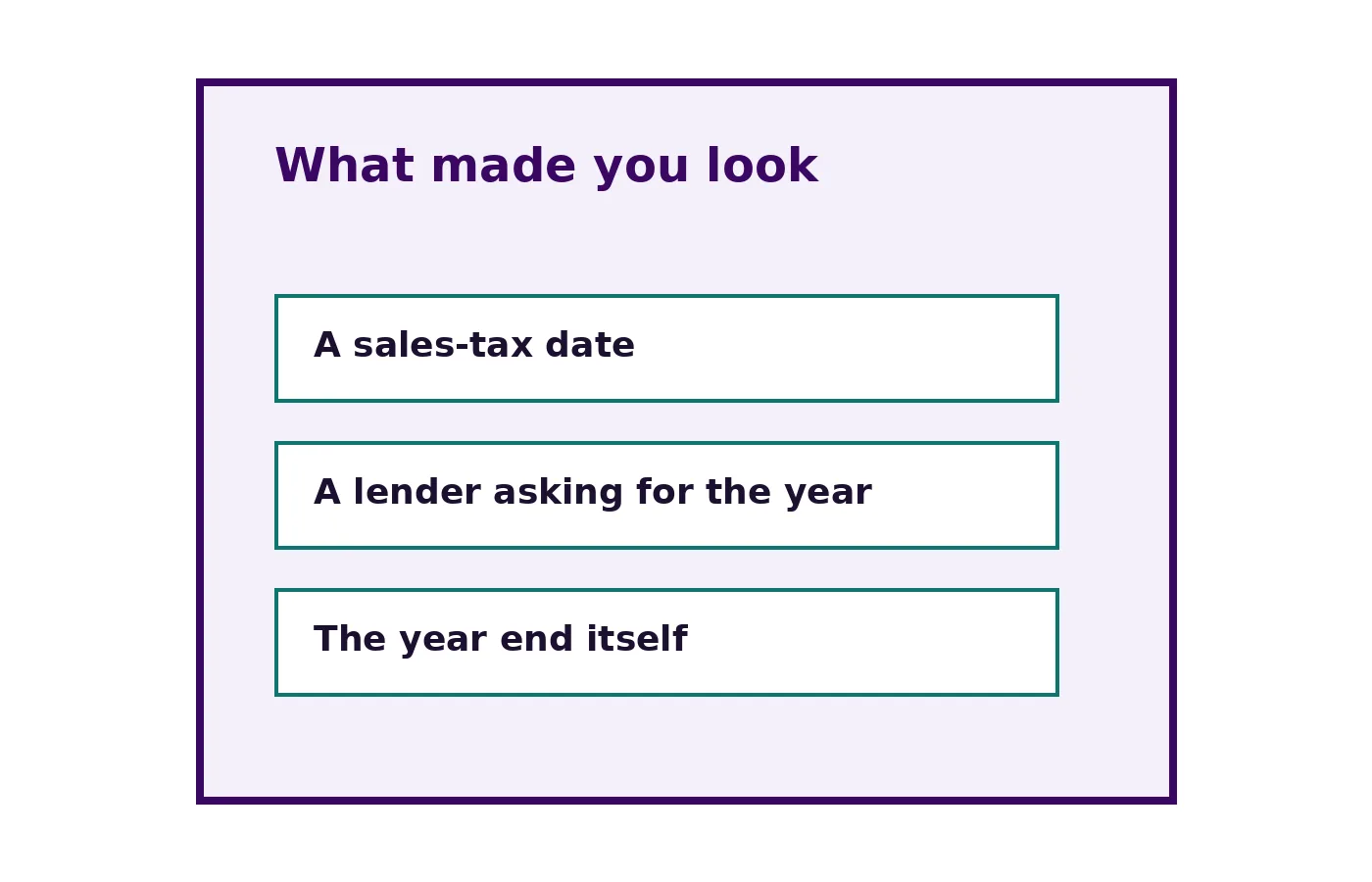
They are different jobs.
A sales-tax date wants tax collected set apart from sales, and a balance that is not pretending the tax is spendable. A lender wants a recent month that ties to the bank and a story for anything that does not. Year end wants gift cards, deposits and stray returns out of income before the year is called closed.
Those three do not have to be rebuilt as three projects. They do have to be sequenced. The date that is actually on the calendar goes first. The others inherit a file that is already telling one story, and they add only what they still lack.
What the pass delivers.
One pass ties the open months to the bank, splits the channels far enough that a payout can be explained, sets the tax aside, and pulls unearned items out of income. Cost for the units that sold gets booked in those same months. A count covers the items that move.
You get a file the person who files can use, and a list of what is still open. The list is allowed to be honest. A pass that hides the open items so the deadline feels finished is how you are back here next quarter.
What can wait.
A perfect count of the slow stock can wait. A rewrite of every closed year can wait. A new chart of accounts for its own sake can wait. If the current accounts can hold the split, the tax, the cards and the cost, we use them. Renaming is not the cleanup.
Personal charges on the store card get marked in the open months. A full archaeology of every old personal charge is a separate conversation if a lender asks for it. We do not pretend that conversation is required to make the next date survivable.
After the date.
The point of the pass is that the next date is dull. The monthly close is the short list that keeps it dull. Bank, tax jar, cards, cost, count. Five lines. If one of them slips, the following month says so while the cash is still in the building.
Name the deadline in the note you send. If you have more than one, name the one with the nearest date. We will say what that one needs and what the others can inherit.
A lender who wants twelve months does not need twelve rebuilt years of trivia. They need the recent months tied to the bank and a plain note for anything still open. Year end can use that same note. The sales-tax date can use the jar. One ordering serves the three asks because each ask is a question about the same floor, not a request for a different set of books.