Retail Store Books CleanupThe tax line is not yours
The notice arrived, and the cash that was supposed to pay it has already been spent on the next order.
Send the notice.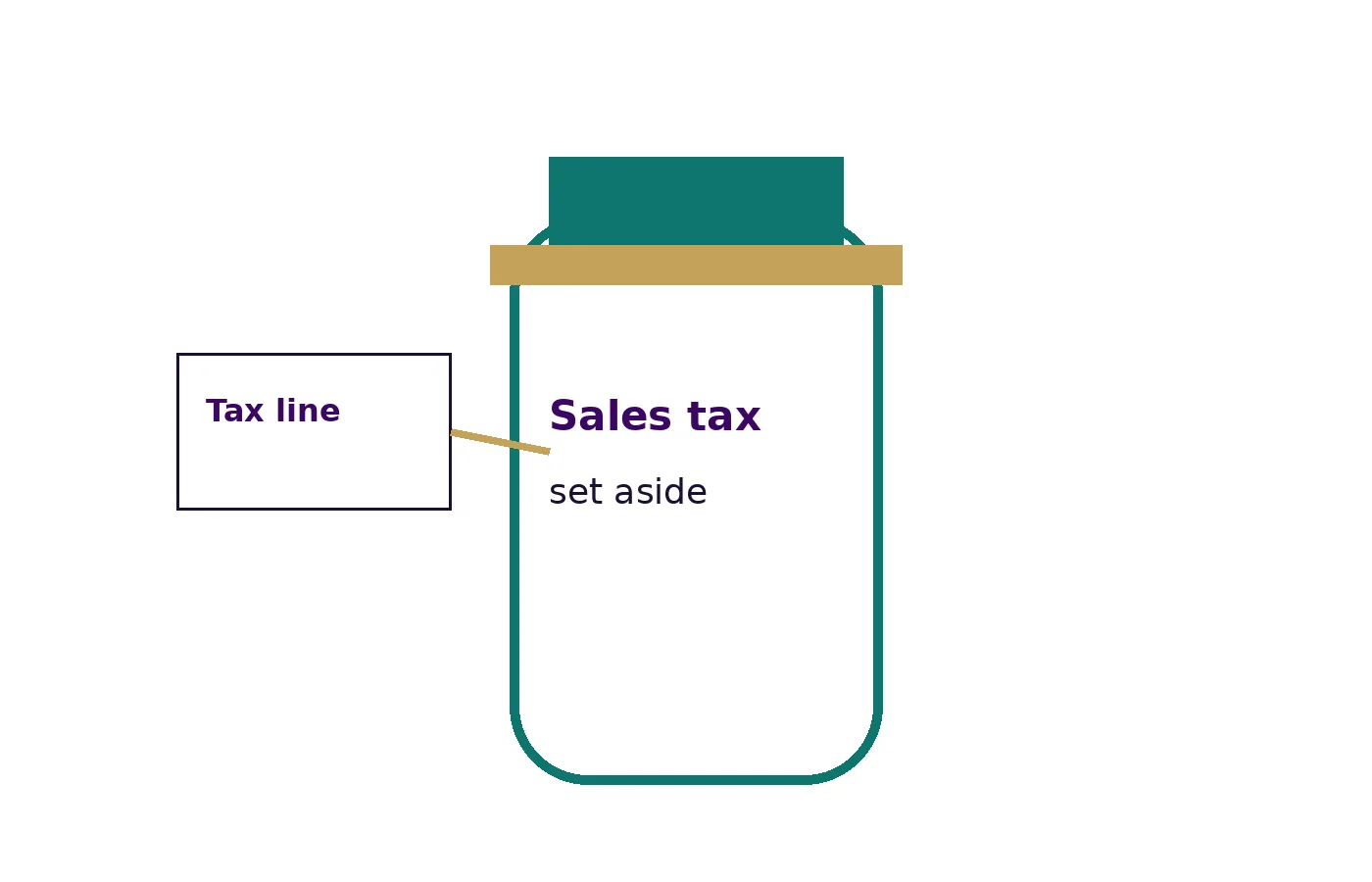
From the day it is rung.
Sales tax collected at the register is someone else's money from the minute the receipt prints. We put it in its own account that day, not at the end of the quarter when the balance has already been used for inventory. The jar is the picture. The account is the file.
If the tax has been living inside sales, the month looks stronger than the cash you can keep. Pulling it out lowers sales and raises a liability. That is the honest shape. We would rather you see it in the month it was collected than in the month the notice arrives.
What the notice needs.
A sales-tax date wants a figure for tax collected, a figure for taxable sales, and a bank balance that is not pretending the tax is spendable. Those three can be ready without rebuilding every old day. The filing itself stays with you and with whoever prepares that return.
We do not guess a rate from memory and drop it on the file. The rate you actually rang is what the receipts say. If two locations rang two rates, they stay two rates. A blended number is how a notice becomes a second notice.
Fees and refunds.
A refund reduces the tax as well as the sale, in the channel that made the original ring. A processor fee is not a reduction of the tax. Netting the fee out of the deposit and then treating the deposit as sales is how both the tax and the revenue go wrong together.
The clearing account for each channel has to show the tax piece separately. When the deposit hits the bank, the tax slice moves to the jar account and the fee moves to its own cost. What remains is the sale you actually kept.
After the first clean month.
The ordinary month then has one extra line on the close list. Tax rung, tax set aside, tax still in the jar. If the jar was spent, the close says so while there is still time to put it back before the date.
Bring the notice and the last month the drawer matched. We start there. A year of mixed tax can be unwound in the open months without a speech about how it should have been done.
If two registers rang the same day, each receipt still has its own tax line. We do not collapse them into a single average to make the notice look tidy. The jar account can hold both, and the return that goes out later can show both. What we will not do is spend the jar on the next vendor order and then discover the date with an empty balance.