Retail Store Books CleanupA date, then it stays true
The catch-up is only useful if the next ordinary month closes on a date you can point at.
Send the last close.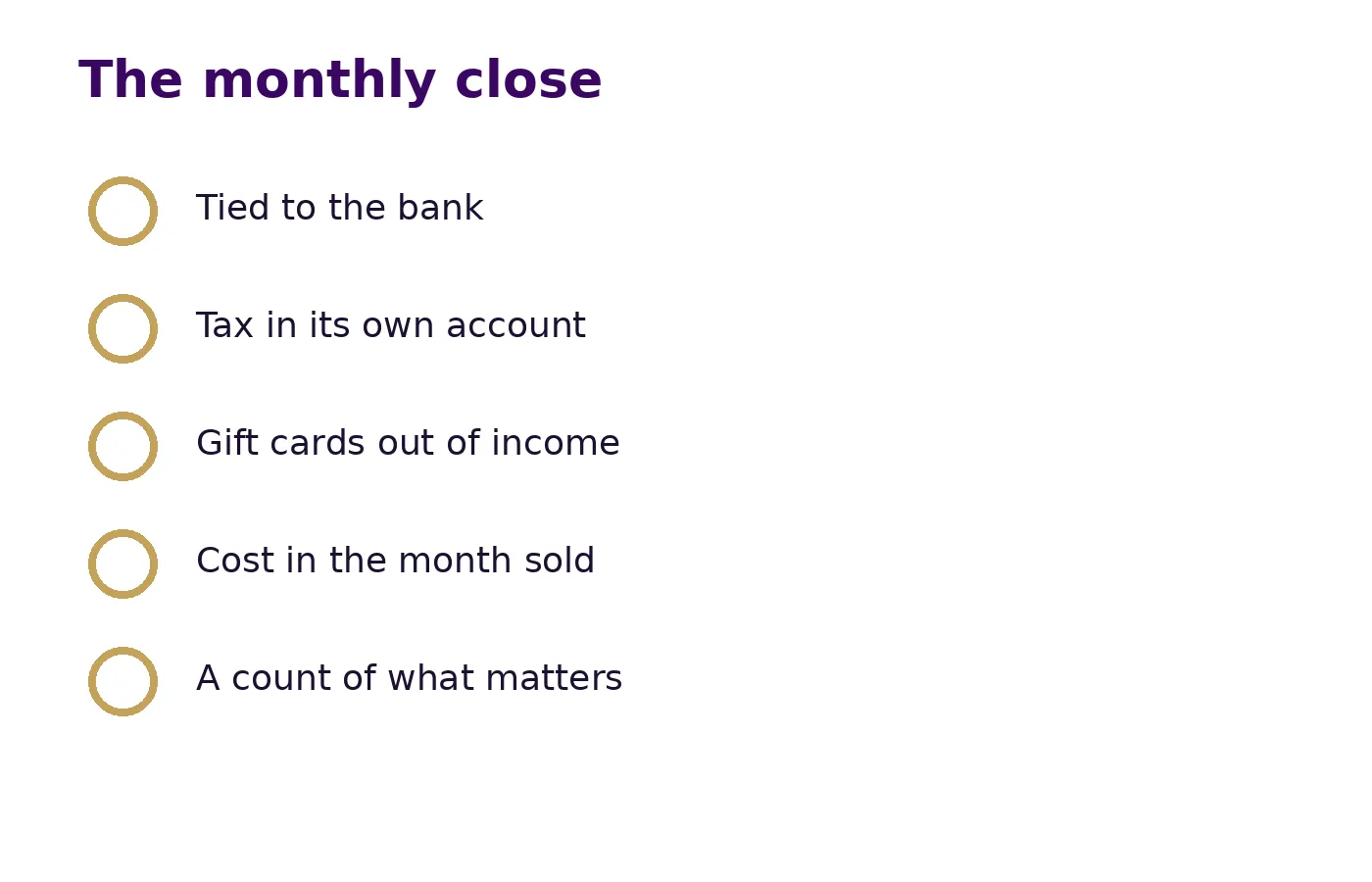
The five lines.
The close we leave you with is short. The month ties to the bank. Sales tax collected sits in its own account. Gift cards and deposits are out of income. Cost of what sold is in the month it sold. The items that move have a count you trust.
Anything that does not fit those five lines stays on an open list with a name. A miscellaneous bucket is how the rumor returns. We would rather a short open list than a file that looks finished and is not.
Who does which line.
You keep the drawer count and the access to the bank and the processor. The file, and the questions about which channel to feed, stay with this practice. Steven Palmieri reads the closed month with you when a decision is sitting on it, which carton not to reorder.
The person who files the return gets the closed months, not a shoebox and a hope. If an attest cover is what a lender wants, that cover is a different firm. The close is still what that firm will ask to see.
When the shop is busy.
Busy months are when the file falls behind, because the counter is the right priority at 6 in the evening. A named close date lets a late file catch up on the next date instead of waiting for a notice. A month that slips is caught then, while the cash is still in the building.
We do not ask you to stop selling in order to close. We ask for the access and for a count of what moved. The rest can be done from the file and a video call. Owners do this from wherever the shop is not.
Payroll stays setup.
If the store has employees, payday stays on the provider you already run. We set the accounts up so the wages and the withholdings land in the right places. This practice does not cut the checks and does not become the card processor.
An owner who also works the floor needs that pay kept apart from draws of profit. The close shows both. Mixing them is how a lender, and the year end, get a story the cash does not support.
The date of the close is a day you pick and then keep. The tenth, the fifteenth, or the day after the weekend rush all work if the same day arrives every month. What fails is a close that happens only when someone remembers. Put the five lines on that day. If a line is not ready, the open list gets the name of the line, and the next close starts there instead of starting from silence. The open list from last month is the first line of this month, so a quiet item does not disappear between the two dates.